Nooit kunnen denken de krant nog eens te halen zonder het zelf te weten. Maar ik werd er door vrienden op gewezen dat een digitale weergave van de noeste arbeid van Zoetermeer Zoekt tijdens de eerste Nederland Leert midweek van Nederland Zoekt in het Nederlands Dagblad is terechtgekomen.
Posts tonen met het label Emerging. Alle posts tonen
Posts tonen met het label Emerging. Alle posts tonen
maandag 2 januari 2012

Zoetermeer / Gouda Zoekt van start: Missionair gemeente zijn op basis van Nederland Zoekt
Als het nieuwe jaar 2012 ontluikt is er goed nieuws mee te delen. In Gouda was sinds 2010 een samenwerking tussen een aantal gemeenten en missionaire groepen aan het ontstaan op het gebied van missionair gemeente zijn. In 2011 is daar een gemeente in Zoetermeer bijgekomen. Er was hiervanuit de behoefte aan praktische handvatten en ervaring met betrekking tot hoe het missionair gemeente zijn vorm te geven. Hier sloot het verhaal van Nederland Zoekt met de ervaring van 3D Ministries goed op aan. Deze gemeenten gaan op zoek om de kennis en ervaring van Nederland Zoekt lokaal in Gouda en Zoetermeer toe te gaan passen.
Achtergronden missionair gemeente zijn: Van emerging movement naar de missionaire gemeente
Momenteel komt er een beweging op gang van christenen en gemeenten die met
discipelschap en missionaire groepen aan de slag gaan om de brug tussen kerk en
samenleving kleiner te maken. In gesprekken met mensen merk ik dat de achtergronden
bij deze missionaire beweging niet altijd helder is. Dat is ook niet zo verwonderlijk aangezien de emerging movement discussie maar heel beperkt voet aan de grond heeft gehad in de afgelopen 15 jaar. Daarom gaat dit artikel in op waar de discussie over vernieuwing van kerk en religie onder
de noemer emerging movement vandaan komt en hoe we vandaaruit bij de beweging van
de missionaire gemeente van vandaag de dag uitgekomen zijn.
donderdag 3 november 2011
Inspiratie voor missionair gemeente zijn
Het is altijd waardevol om van anderen te leren, in dit bericht een aantal gelegenheden daartoe op het gebied van missionair gemeente zijn.
zondag 19 juni 2011
Something is happening..
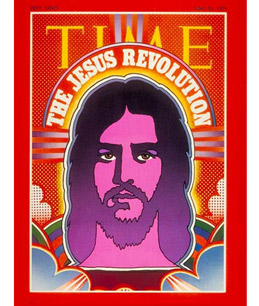
WANTED
JESUS CHRIST
ALIAS: THE MESSIAH, THE SON OF GOD, KING OF KINGS, LORD OF LORDS, PRINCE OF PEACE, ETC.
> Notorious leader of an underground liberation movement
>Wanted for the following charges:
—Practicing medicine, winemaking and food distribution without a license.
—Interfering with businessmen in the temple.
—Associating with known criminals, radicals, subversives, prostitutes and street people.
—Claiming to have the authority to make people into God's children.
There is a revival of religion everywhere—except in the church.
In 1966 Beatle John Lennon casually remarked that the Beatles were more popular than Jesus Christ; now the Beatles are shattered, and George Harrison is singing My Sweet Lord. The new young followers of Jesus listen to Harrison, but they turn on only to the words of their Master: "For where two or three are gathered together in my name, there am I in the midst of them."
zaterdag 12 mei 2007
Nothing is totally true: comment on emerging movement blog
Although there is a lot of truth in the emerging movement blog of today, I still found one piece of criticism on the point that it says that people of today are very much interested in spirituality but not in religion. I there is at least a generational difference in this. Since I live among a lot of students in their early twenties and I find that they, maybe in contrast with older generations, have moved beyond spirituality and want to know about religion today here in the Netherlands. And not only religion, but very often are specifically interested in christianity, which they have come to value as at least interesting, valuable roots of our society. Where older Dutch generations were raised in a dominant christian society, their children were raised in a dechristianizing society which was dominantly allergic to christianity. A lot of todays young people are raised in a non-christian society, without much knowledge about christianity and without the allergy. But, very often nowadays, when they come aware of the christian roots of our society they become genuinly interested in what has driven so many people in christianity in past ages.
Emerging Movement
Welcome to one of my first blogs. In this blog I want to make a statement about why I am involved in the emerging movement and why I think it is relevant.
Since there's great material out there i used a statement from Motionsickness which formulates very well why I think the emerging movement is relevant today in our postmodern culture:
A recent response to this atmosphere is the emerging church development. Emerging churches, according to Eddie Gibbs, are “missional communities arising from within postmodern culture and consisting of followers of Jesus who are seeking to be faithful in their place and time.” He brings a warning as well. Emerging church seeks to:
From: Paper from Motionsickness, found on blog of Andrew Jones
Since there's great material out there i used a statement from Motionsickness which formulates very well why I think the emerging movement is relevant today in our postmodern culture:
Postmodernism signifies the quest to move beyond modernism, specifically, it involves a rejection of the modern mind-set, but launched under the condition of modernity.” Particular is the rejection of the modern notions of knowledge as certain, objective and good. While modernity was a “rage for order, regulation, stability, singularity and fixity;” postmodernism is a “rage for chaos, uncertainty, otherness, openness, multiplicity and change.” Framed in different terms, postmodernism embraces centrelessness, lack of absolute truths, celebration of diversity, movement from an objectivist to constructionist perspective and signals the end of the ‘meta-narrative’ and the end of science. Another awareness is that in postmodernism, there is “extreme openness to spiritual things” - spiritual but not religious.
A recent response to this atmosphere is the emerging church development. Emerging churches, according to Eddie Gibbs, are “missional communities arising from within postmodern culture and consisting of followers of Jesus who are seeking to be faithful in their place and time.” He brings a warning as well. Emerging church seeks to:
“dismantle ideas of church that simply are not viable in postmodern culture. Neither the gospel nor the culture demands these expressions of faith. Emerging churches remove modern practices of Christianity, not the faith itself…many of us do not know what a postmodern or post-Christendom expression of faith looks like. Perhaps nobody does. But we need to give these leaders space to have this conversation, for this dismantling needs to occur if we are to see the gospel translated for and embodied in twenty-firstcentury Western culture.”The emerging church response has been that:
“if you have a new world, you need a new church. You have a new world.”In terms of answering the question of how Christians relate to culture, the emerging church states that there is a place for ‘adapting to’ and ‘arising from’ culture.
“We won’t need a new religion per se, but a new framework for our theology. Not a new Spirit, but a new spirituality. Not a new Christ, but a new Christian.” There is balance of what must change and what must not.
From: Paper from Motionsickness, found on blog of Andrew Jones
Postmodernism
While modernity was a “rage for order, regulation, stability, singularity and fixity;” postmodernism is a “rage for chaos, uncertainty, otherness, openness, multiplicity and change.
Source
Source
Abonneren op:
Posts (Atom)